
When a food manufacturer or ingredient importer wants to source amaranth seeds from India, the real question is rarely just where to buy the grain.
Instead, the important questions are:
- What specification can the supplier consistently deliver?
- Is the supplier a processor or a trader?
- What certifications and export documents are available?
- Can the supplier support repeat shipments?
- How should different Indian quotations be compared?
This guide explains how to source bulk amaranth seeds from India, evaluate suppliers, define specifications, compare quotations and prepare an RFQ for commercial supply.
Amaranth Seeds, Rajgira and Ramdana: What Should Buyers Specify when sourcing from India?
Indian suppliers commonly sell amaranth under names such as Rajgira and Ramdana. Internationally, the product is generally referred to as amaranth seeds or amaranth grain.
For an import order, however, the product name alone is not enough. Instead, the purchase specification should clearly define:
- Purity
- Moisture
- Variety or grain type where relevant
- Foreign matter tolerance
- Processing level
- Microbiological requirements
- Pesticide residue requirements
- Organic or conventional status
- Packaging
- Required documentation
This avoids one of the most common problems in commodity sourcing: two suppliers quoting what appears to be the same product when their actual specifications are different.
Why Gujarat Matters When Sourcing Amaranth Seeds from India
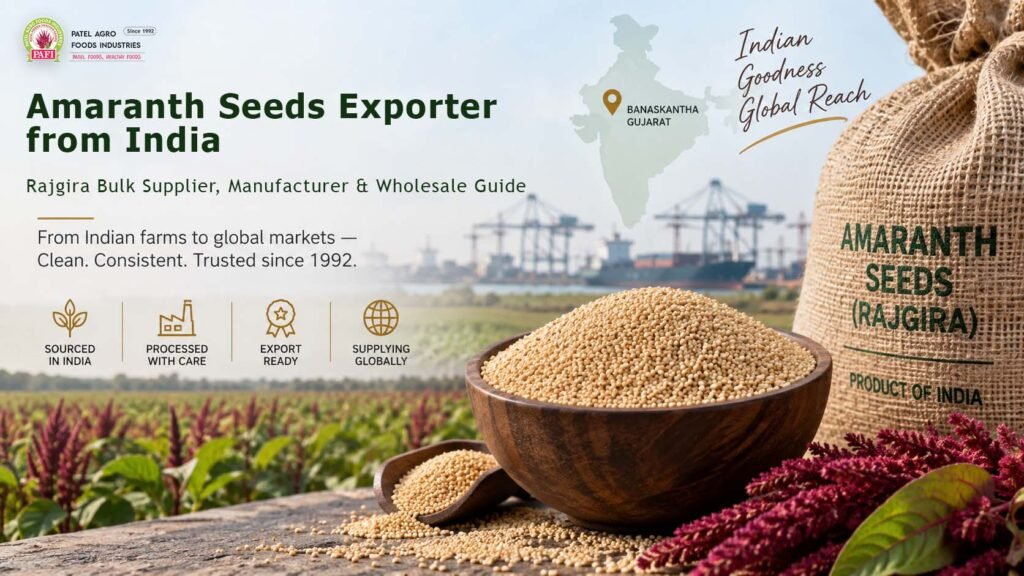
Gujarat is an important sourcing region for Indian amaranth, with Banaskantha district being particularly relevant to PAFI’s sourcing and processing operations.
For an importer, when sourcing amaranth seeds from India, the location of the processing facility is an important part of supplier evaluation.
In addition, a supplier located close to the raw-material sourcing region can potentially have better visibility over procurement, incoming quality and lot traceability. It can also reduce unnecessary movement of raw material before processing.
At Patel Agro Foods Industries, our processing facility is located in Deesa, Banaskantha, Gujarat, where we have operated since 1992.
Our amaranth is sourced through our farmer network and processed at our own facility before being prepared for export.
For buyers evaluating an Indian supplier, a useful question is:
“Where is the actual processing facility?”
Ask for the factory address, not just the company’s correspondence or registered office.
What Amaranth Grades Should Buyers Source from India?
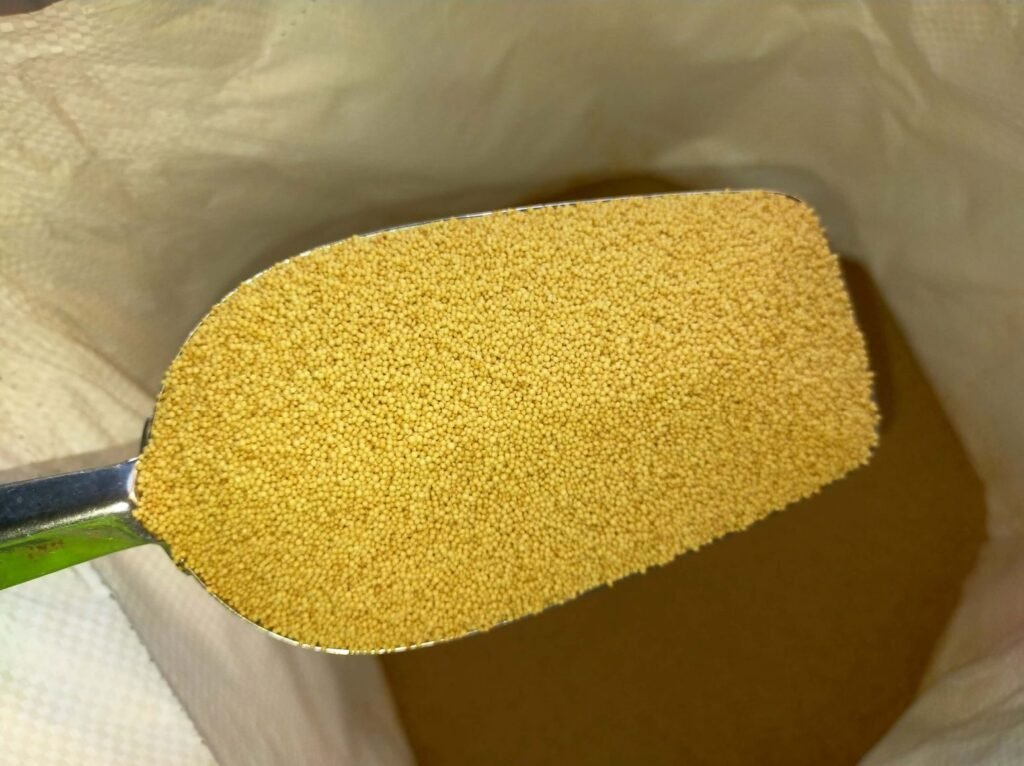
There is no single universal definition of “premium” amaranth in international trade. Buyers should therefore compare the actual specification rather than relying on grade names.
Examples of commercial specifications buyers may encounter include:
Standard Food Grade
A commonly requested specification is around 99% purity, with moisture requirements agreed according to the buyer’s application and destination requirements.
This can suit commodity buyers, ingredient distributors and processors that carry out additional processing after import.
Premium Food Grade
Buyers requiring cleaner and more visually consistent grain may specify around 99.5% purity with tighter moisture and foreign-matter tolerances.
This can be relevant for applications where amaranth remains visible in the finished product, including cereals, bars, bakery products and snack applications.
Higher-Purity Specifications
Some buyers may require specifications approaching 99.95% purity or additional controls beyond conventional food-grade requirements.
However, the correct specification should be based on the buyer’s process and destination requirements rather than simply selecting the highest number available.
Therefore, the important point is that 99%, 99.5% and 99.95% are not interchangeable commercial specifications.
Higher purity can require additional cleaning, sorting, rejection and quality-control steps, which can affect the final export price. For current specifications, packaging options and bulk supply details, see our Amaranth Seeds Product Page.
How to Evaluate Amaranth Suppliers from India: Processor vs Trader
This is one of the most important checks before placing a first container order.
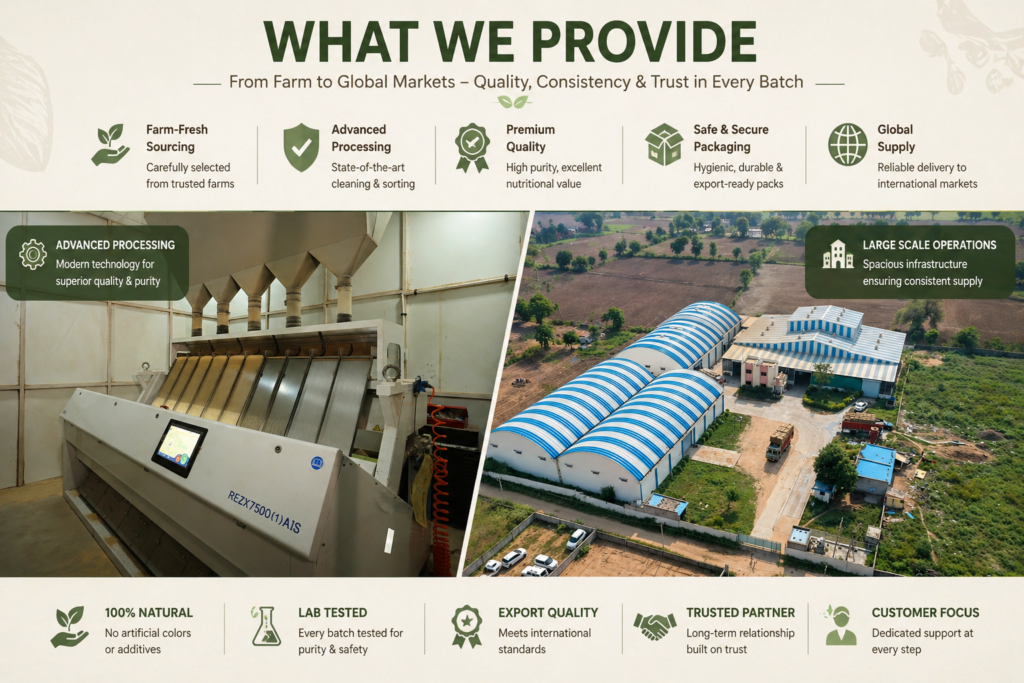
A trader may purchase material from several processors and consolidate or repack it for export. By contrast, a manufacturer or processor controls more of the journey from incoming raw material through cleaning, sorting, grading and packing.
When you source amaranth seeds from India, the more important question is how much control and traceability the supplier has over your specific lot.
Before purchasing, ask:
- Where is the processing facility?
- Is the facility owned or operated by the exporter?
- Can the supplier show the cleaning and sorting process?
- Is the COA linked to the actual shipment lot?
- Can the supplier arrange pre-shipment inspection?
- How is raw material and finished-lot traceability maintained?
- Can the same specification be maintained on repeat orders?
A video call from the processing floor can often tell you more than a polished supplier presentation.
At Patel Agro Foods Industries, amaranth is processed at our own facility in Deesa, Banaskantha. We maintain lot-level processing and quality records and support buyer facility visits or video inspections for prospective customers. If you are evaluating Indian suppliers for regular commercial supply, you can also learn more about our amaranth export capabilities from India.
What Export Documents Should You Expect When Sourcing Amaranth from India?
Export requirements vary by destination, product specification and buyer requirements. The following are common documents or checks buyers may encounter; importers should confirm the current requirements applicable to their specific consignment before shipment.
Amaranth Export Requirements for the European Union
APEDA registration certificate from your supplier. Phytosanitary certificate from the Plant Quarantine Authority of India. Certificate of Origin from the Chamber of Commerce or APEDA. Lot-wise COA covering purity, moisture, microbiological parameters, and — for EU pesticide residue MRL compliance report under EC Regulation 396/2005. The MRL requirement for sesame caused significant EU port rejections in 2020 and 2021 due to ethylene oxide contamination; for amaranth the issue is different but buyers should request explicit confirmation that pesticide screening covers the EU Positive List. For organic lots, a Transaction Certificate under EU Regulation 2018/848 is required per shipment. EU buyers should also ask their supplier which EU-approved inspection and certification body issued the organic certificate, as not all bodies are accepted across all EU member states.
Amaranth Export Requirements for the United States
FDA Prior Notice filed electronically before the shipment arrives at the US port. Phytosanitary certificate. Certificate of Origin. Lot-wise COA. USDA NOP certification if organic. The importer of record must hold a valid FDA Food Facility Registration. For amaranth specifically, the FDA has not issued specific import alerts (unlike some other Indian commodities) but routine sampling at entry ports does happen and an exporter who cannot provide a lot-specific COA on request is a compliance risk under FDA’s food safety modernisation framework.
Amaranth Export Requirements for Japan
Phytosanitary certificate. Aflatoxin test report from a NABL-accredited lab showing total aflatoxin below 10 ppb. Certificate of Origin. Pesticide residue report specifically covering Japan’s Positive List system, which is one of the most extensive pesticide monitoring frameworks globally. Japanese buyers typically require steam sterilisation treatment before shipment; confirm this requirement with your Japanese buyer before placing the purchase order with your Indian supplier, as not all exporters offer it.
Amaranth Export Requirements for the Middle East
Phytosanitary certificate. Certificate of Origin. Halal certificate where required by the buyer or the destination country. COA per lot. Saudi Arabia follows Codex Alimentarius limits for pesticide residues; UAE buyers may have additional requirements specific to ESMA. Middle East buyers sometimes request a Health Certificate in addition to the phytosanitary, particularly for UAE and Saudi Arabia. Confirm which documents are required before shipment rather than after goods have been stuffed into a container.
Amaranth Export Requirements for Australia and New Zealand
Phytosanitary certificate. Certificate of Origin. COA with microbiological results including Salmonella and E. coli. FSANZ compliance documentation. Amaranth is a declared allergen in some applications in the Australian market; packaging and documentation should note this if relevant to the end product. AQIS (Australian Quarantine and Inspection Service) may request inspection on arrival depending on the consignment. Pre-shipment inspection by an accredited body is recommended for first-time shipments to Australian buyers.
How to Source Amaranth Seeds from India: What Should Your RFQ Include?
If you are sourcing amaranth seeds from India, provide as much of the following information as possible in your RFQ:
Product: Amaranth seeds / Rajgira
Quantity: MT per shipment and annual requirement
Specification: 99%, 99.5%, or buyer-specific
Moisture: Required maximum
Organic: Organic or conventional
Application: Food, popping, milling, extrusion, etc.
Packaging: 25 kg / 50 kg / FIBC / retail
Destination: Port and country
Incoterm: FOB / CFR / CIF / other
Shipment window: Required loading period
Documentation: Destination-specific requirements
Payment: Preferred terms
Inspection: Whether pre-shipment inspection is required
A detailed RFQ allows an Indian exporter to quote against the actual product you need rather than sending a generic amaranth price. You can submit an amaranth sourcing enquiry with your quantity, specification and destination requirements.”
Sourcing Bulk Amaranth Seeds from India: Packaging, MOQ & Export Logistics
| Format | Size | Best for |
|---|---|---|
| PP woven bags (standard) | 25 kg / 50 kg | Food manufacturing, commodity buyers |
| Jute bags | 25 kg / 50 kg | EU buyers with natural packaging requirements |
| FIBC jumbo bags | 500 kg / 1 MT | Oil mills, large industrial processors |
| Retail / private label | 500 g / 1 kg / 5 kg | Brand owners, health food distributors |
To source bulk amaranth seeds from India, the minimum order quantity is 1 MT. However, trial shipments for new buyers are accepted below container load. A standard 20ft FCL holds 18 to 20 MT in 25kg PP bags; a 40ft FCL holds 22 to 24 MT. Shelf life is 12 months from processing date, stored below 25 degrees Celsius in dry conditions.
Transit times FOB Mundra Port: Rotterdam 18 to 22 days, Hamburg 20 to 24 days, Los Angeles 22 to 26 days, New York 24 to 28 days, Dubai 6 to 9 days, Tokyo 18 to 22 days, Melbourne 14 to 18 days. Lead time from order confirmation to container loading is 2 to 3 weeks for conventional, 3 to 4 weeks for organic.
Amaranth Applications: Which Amaranth Specification Do You Need?
Amaranth for Food manufacturers: Bakery, Cereals, Snacks
Whole amaranth seeds go into multigrain bread as a visible topping, into granola as a base grain, into energy bars as a protein-dense filler, and into extruded snack products as an ingredient. For baking applications, premium 99.5% purity with moisture below 8% is the standard specification. For extrusion, standard food grade is typically sufficient but confirm with your production team.
Amaranth for Baby Food and Infant Nutrition Manufacturers
Amaranth’s high lysine content and digestibility make it suitable for infant cereal formulations. Baby food manufacturers working with amaranth typically specify ultra-premium grade with enhanced microbiological limits, heavy metal testing to EU regulation limits (Regulation EC 1881/2006 for lead, cadmium, and arsenic), and a full chain of custody document from our farmer intake records to the final packed lot.
Amaranth for Nutraceutical and Supplement Brands
Whole grain amaranth, amaranth flour, and amaranth protein concentrate all have nutraceutical applications. For brands selling whole seed in capsules or health food formats, the specification requirements are similar to premium food grade with additional testing for heavy metals and pesticide residues per the relevant pharmacopoeial standard.
Amaranth for Popping and snack production
Pop yield is determined by moisture content. Seeds above 10% moisture give low and inconsistent pop rates. Consistently achieving pop rates above 85 percent requires amaranth processed to below 9% moisture with tight colour sorting to remove immature or overripe seeds that do not pop cleanly. If pop rate is your primary quality criterion, request a 500g sample and test it before placing an order rather than relying on spec sheet data alone.
Amaranth for Commodity traders and ingredient distributors
Standard food grade meets the requirements for traders who will resell to food manufacturers in their market. Lot-wise COA, clean phytosanitary documentation, and consistent colour are the priorities.
How to Compare Amaranth Suppliers from India?
When comparing suppliers, don’t rank quotations based only on FOB price.
Compare the quotation across these variables:
| Factor | What to check |
|---|---|
| Purity | Exact percentage and testing method |
| Moisture | Maximum agreed level |
| Processing | Cleaning, grading, optical sorting |
| COA | Lot-specific or generic |
| Certification | Organic and other required certifications |
| Packaging | Material, size and printing |
| Quantity | Per shipment and annual volume |
| Price validity | How long quotation remains valid |
| Shipment | Production and loading schedule |
| Inspection | Pre-shipment inspection terms |
| Payment | Advance, LC or other agreed terms |
| Traceability | Ability to trace the export lot |
For example, a supplier quoting USD 50–100/MT less may not actually be cheaper if the specification, packaging, testing or commercial terms are different.
There is no single price that can be used to compare all Indian amaranth quotations. Buyers should compare purity, processing, packaging, certification, quantity and Incoterm alongside the quoted price. For a deeper explanation of wholesale, export and FOB pricing, see our Amaranth Seeds Price Guide.
This framework is particularly useful when comparing quotations from multiple amaranth seeds exporters from India.
Frequently Asked Questions About Amaranth Seeds Exporters from India
What is the difference between Rajgira and amaranth seeds?
Rajgira is a commonly used Indian name for amaranth. International buyers generally use the term amaranth seeds or amaranth grain. For commercial purchasing, the exact specification should be defined rather than relying only on the product name.
What purity levels are available when sourcing amaranth from India?
Commercial specifications vary by supplier and application. PAFI can discuss requirements around standard food-grade and higher-purity specifications depending on the buyer’s application and destination.
What is the HS code for amaranth seeds from India?
HS classification should be confirmed against the exact product and current Indian export classification before shipment. Buyers should also check the corresponding tariff classification in their destination country.
What is the MOQ for bulk amaranth from India?
PAFI’s standard MOQ is 1 MT. Trial quantities can be discussed for new buyers depending on the requirement.
Can I visit the processing facility before ordering?
Yes. PAFI supports buyer visits to its processing facility in Deesa, Banaskantha, with advance coordination. Video calls from the processing facility can also be arranged.
Do you supply organic amaranth?
Yes. Certified organic amaranth can be supplied for applicable markets, subject to certification, availability and destination requirements.
How do I compare amaranth seed prices from Indian suppliers?
There is no single export price because quotations depend on purity, processing, certification, packaging, quantity, shipment timing and Incoterm. Buyers should compare quotations against the same specification and commercial terms rather than comparing the headline price alone.
Can you supply private label packaged amaranth seeds?
Yes. PAFI can discuss private-label packaging requirements for suitable retail and bulk applications. Buyers can share their required pack size, artwork, quantity and destination-market requirements for evaluation.
Source Amaranth Seeds from India with a Specification-Based RFQ
Patel Agro Foods Industries is an agri-processing and export company based in Deesa, Banaskantha, Gujarat, operating since 1992.
We process amaranth for international buyers and can discuss conventional and certified organic requirements, different purity specifications, bulk packaging, documentation and shipment requirements.
If you are sourcing amaranth seeds from India for regular commercial supply, send us your current specification or RFQ.
E-mail: info@patelagrofoods.com
Phone: +91 98254 58490
Submit an enquiry
We can provide the relevant specification, current quotation and sample availability based on your requirement.
